A location pin is only part of the picture
Describe the vehicle’s position in relation to the road, driveway or parking area. Tell us about slopes, soft ground, tight entrances or obstacles that you can already see. If the access is on private property, identify who can authorize entry. The goal of the first conversation is to understand the situation, not to ask you to make an equipment or recovery-method decision.
If you have photographs taken from a safe, accessible position, mention them during the call.
Be clear about what is unknown
Tell us whether the vehicle starts, whether its wheels can turn and whether you have noticed damage. If you cannot tell, that is useful information too. Avoid presenting a guess as a confirmed condition. The circumstances of a winch-out can vary, and service availability for the specific situation should be discussed before you assume the vehicle can be recovered in a particular way.
Think about what happens afterward
The vehicle may need a tow after it is out of its current position. Explain any reason you believe it cannot be driven, and have a possible receiving location ready. Ask how the recovery request and any onward transport will be arranged and charged. If someone else owns the vehicle, have the appropriate contact available to discuss permission and the next steps.
GOOD QUESTIONS.STRAIGHT ANSWERS.
Is a winch-out the same as a tow?
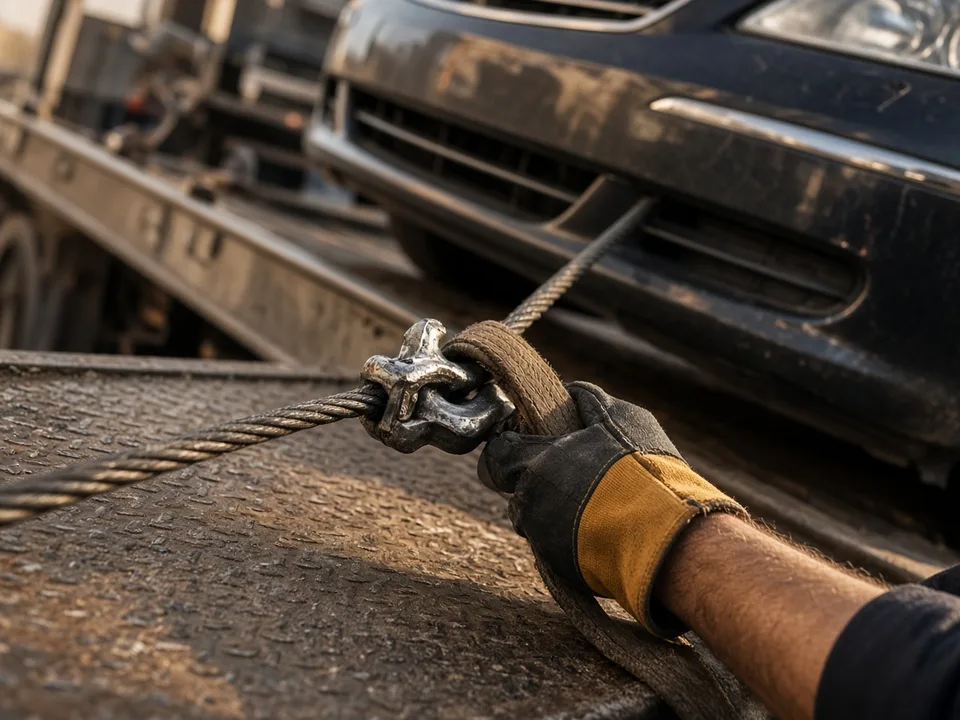
They are different requests. A winch-out concerns moving a stuck vehicle from its position; a tow concerns transporting it to a destination. Discuss whether your situation may involve both.
Can you recover a vehicle from any location?
No universal promise is made here. Call with the location, access and vehicle details so the particular request can be discussed.
Should I send pictures?
Tell us if you have pictures available. They can help explain the position, but the arrangements still need to be confirmed by phone.